Walk into most schools today and you’ll see the same thing: children hunched over textbooks, memorising formulae they’ll forget next month, grinding through practice papers to bump up their percentage by another point or two. The obsession with marks has turned education into something narrow and joyless.
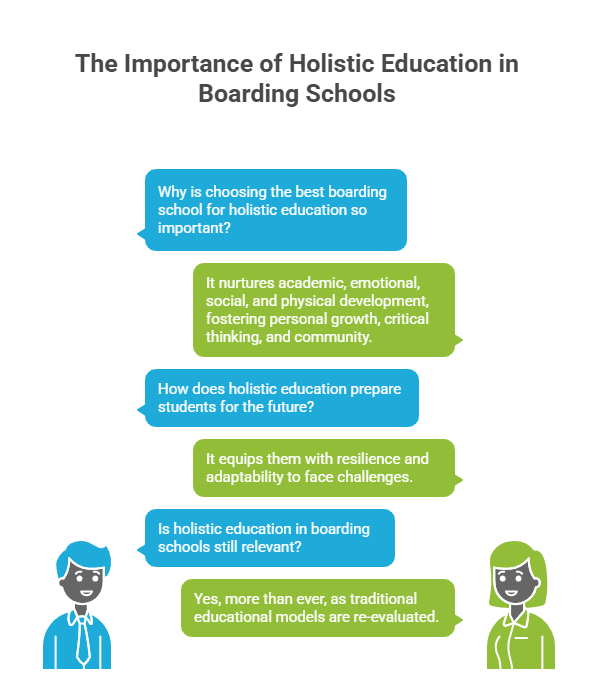
This wasn’t what schools were supposed to do. They weren’t meant to produce walking calculators who can recite the periodic table but can’t hold a conversation or cope with disappointment. Parents who look for the best boarding school for holistic education understand this instinctively—they want something better for their children.
But “holistic” gets thrown around so much it’s almost lost meaning. What are we actually talking about?
Education That Sees Children as People, Not Statistics
Holistic education means you’re developing a person, not programming a robot. Your child needs academic strength, absolutely. But they also need physical fitness, emotional maturity, creative outlets, and a solid moral compass. These things don’t develop automatically—they require deliberate attention.
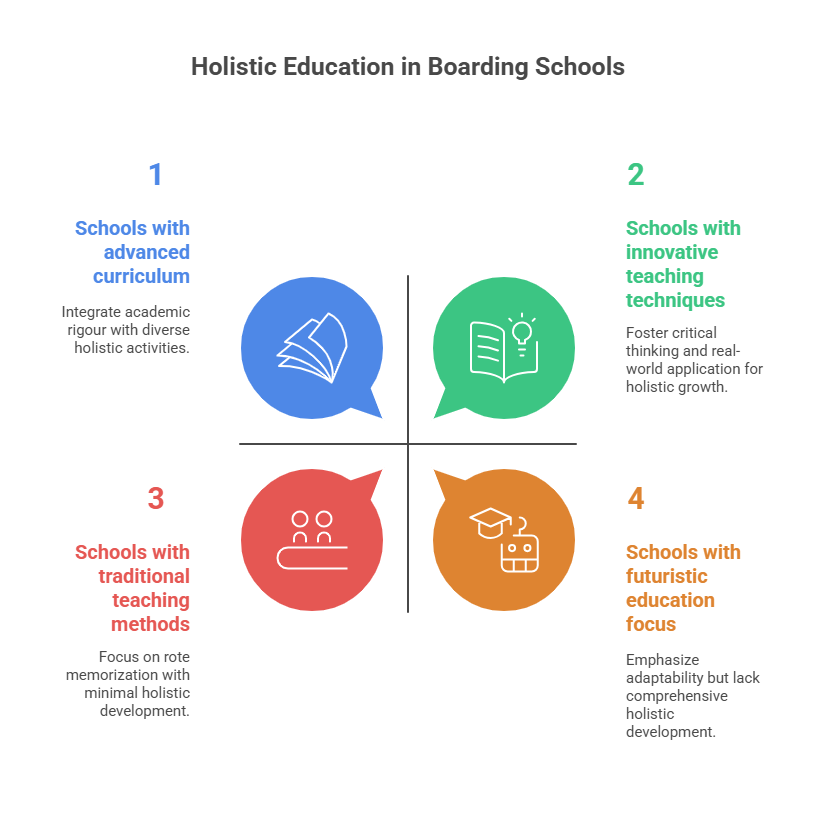
The best boarding school in India won’t just drill grammar rules and trigonometry into your child’s head. They’ll also put a paintbrush in their hand, teach them how to lose gracefully on the football pitch, and help them navigate the messy business of friendship and conflict. Schools with advanced curriculum build knowledge, certainly, but they’re equally focused on building character.
Here’s something interesting: schools with qualified faculty know that teaching facts is the easy part. Any competent teacher can explain photosynthesis or the Mughal dynasty. The harder work—the work that actually matters—is teaching children how to think independently, how to question assumptions, how to connect ideas across disciplines, how to bounce back from failure.
Schools with innovative teaching techniques make learning feel like discovery rather than drudgery. Students tackle projects that mirror real problems. They debate ideas instead of just copying them down. They connect what they’re learning to the world outside classroom windows. Best boarding schools for futuristic education recognise that in twenty years, your child won’t need to remember the quadratic formula (their phone will handle that)—they’ll need creativity, adaptability, and sound judgement.
Why Physical Development Isn’t Optional
Let’s talk about something obvious that schools somehow forget: children have bodies, not just brains. You can’t separate the two. That matters because habits formed now last decades.
Look around the campus when you visit schools. Schools with well-maintained infrastructure show you their priorities through their spaces. A library that actually invites browsing, with comfortable seating and good lighting.
The boarding facilities deserve equal scrutiny. Schools with comfortable accommodation understand that children living away from home need environments that feel secure, not institutional. Clean boarding schools maintain standards that let parents sleep soundly at night, knowing their child’s health isn’t compromised by shoddy hygiene.
The Learning That Happens Between Classes
Here’s what surprised me when I first studied boarding schools seriously: the deepest education happens outside formal lessons. Boarding schools with discipline—proper discipline, not arbitrary rules—create structures where children learn to manage themselves. They develop time management skills because nobody’s standing over them. They learn personal responsibility because consequences for poor choices are immediate and natural.
Schools with well-established hostel rules provide guardrails without being oppressive. Children need boundaries to feel safe, but they also need freedom to make mistakes and learn from them.
Living alongside sixty other teenagers from different states, religions, economic backgrounds, and temperaments teaches things no classroom can. You learn patience when your roommate snores. You learn negotiation when everyone wants to watch different programmes.
Quality Education Doesn’t Require Wealth
Affordable boarding schools in India have demolished this assumption repeatedly. Affordable quality boarding schools achieve excellence through careful management and genuine commitment to education rather than obsession with profit margins.
Affordable co-educational boarding schools add another dimension—preparing children for workplaces and communities that include everyone. Top co-ed boarding schools create environments that reflect the actual world students will inhabit as adults, where gender becomes irrelevant to capability and collaboration.
Affordable schools with experienced faculty demonstrate something important: dedicated teachers choose institutions based on educational philosophy and teaching environment, not just salary packages. The best educators want to actually educate, which means they gravitate towards schools that respect their profession.
For families with dietary preferences, top vegetarian boarding schools offer nutritious meal programmes that honour these choices whilst ensuring children receive proper nutrition during crucial growth years. Schools with clean and hygienic campus extend this care systematically throughout the institution.
Your Decision Shapes Their Future
Choosing the right boarding school means finding an institution that sees your child completely—not just their current marks or their potential examination scores, but their personality, their struggles, their hidden strengths, and their half-formed dreams. The right school challenges them appropriately, supports them genuinely, and creates space for them to discover who they’re becoming.